Silence is Golden? Why Explicit Cover Isn’t Always Better Cover

If you ask your favourite AI tool, “What does a silent insurance policy wording mean?” you’ll likely get an answer along the lines of:
“A silent insurance policy wording refers to an insurance policy that does not explicitly state whether a particular risk or situation is covered or excluded. In other words, the policy is ‘silent’ on that specific issue.
What that means in practice
If a policy is silent on a risk:
It’s not clearly covered.
It’s not clearly excluded.
This can lead to disputes or legal interpretation if a claim arises.
Why this is often seen as a problem
Insurers may argue the risk was not intended to be covered.
Policyholders may argue that, since it isn’t excluded, it should be covered.
Courts are sometimes required to interpret the silence based on contract law and intent.”
At M & M Underwriting, we don’t entirely agree with the negative framing of silence.
Our Product Liability Policy Wording is “silent” in respect of efficacy cover, and we believe this is a positive feature for our policyholders. Here’s why.
A deliberately simple and flexible Operative Clause
Our Product Liability Policy Wording is designed to be as simple and flexible as possible.
The Operative Clause requires only that the Policyholder receives an allegation that their product has caused Injury, Death, Disease, or Damage.
We do not specify which causes of Injury, Death, Disease, or Damage are covered and which are excluded. This is where the wording is considered “silent”.
In practical terms, this means that if the Policyholder is legally liable to pay compensation because of their product, the Operative Clause applies regardless of the cause.

How this works in real scenarios
Efficacy claims
If a third-party claim arises because a product failed to perform its intended function (inefficacy), and that failure results in Injury, Death, Disease, or Damage, the claim is covered to the full extent of the policy.
Defence Costs protection
There is an additional benefit where a Policyholder receives an allegation, but it is ultimately determined that they are not legally liable.
In these circumstances, the Defence Costs section of our Operative Clause applies, covering the costs of defending the Policyholder’s legal position.
For example, if a claimant incorrectly alleges that a product failed to perform its intended function - when in fact the loss arose from misuse or abuse of the product - the Defence Costs incurred in defending that allegation are covered in full.
It’s worth noting that a policy wording which excludes efficacy will typically also exclude the Defence Costs associated with an efficacy allegation, leaving the Policyholder to deal with those costs themselves.

Why be “silent” at all?
It’s a fair question:
Why doesn’t M & M Underwriting simply specify which causes are covered, rather than creating uncertainty by being silent?
Our view is simple.
If we attempted to list the top 100 likely causes of loss, we would inevitably be limiting cover by excluding causes 101, 102, 103 - and so on.
By stating only that the Operative Clause applies when a Policyholder receives an allegation that their product has caused Injury, Death, Disease, or Damage, we automatically cover all causes, including those we couldn’t reasonably have anticipated. That breadth of cover is clearly in the Policyholder’s favour.
A real-life example
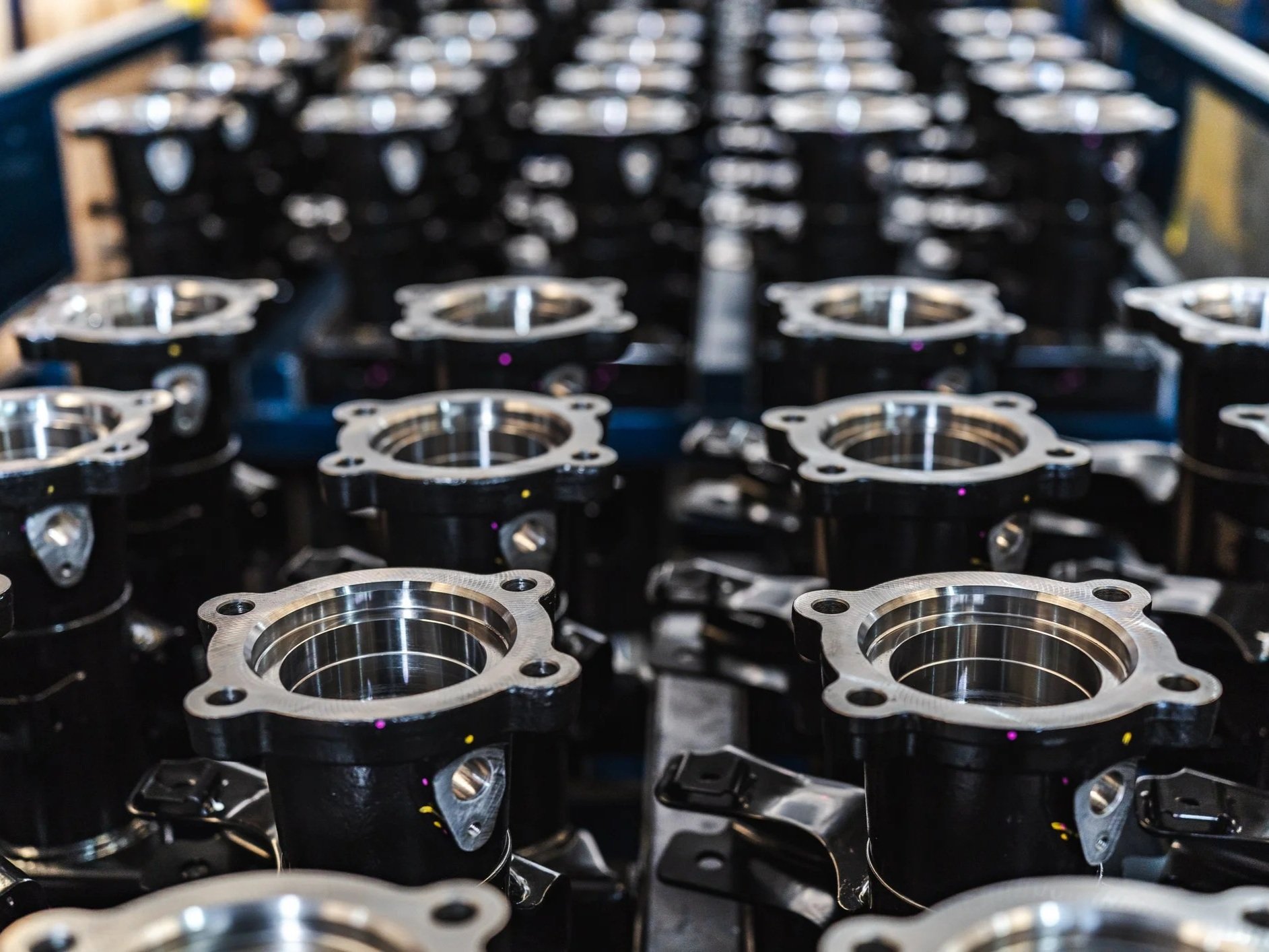
We provided Product Liability cover to a wholesaler of automotive parts supplying everything from furry dice to braking systems.
It was easy to imagine dozens, if not hundreds, of ways things could go wrong. However, the claim we ultimately paid arose from an entirely unexpected cause: the bottom of a cardboard box gave way, a component fell through, and it broke the claimant’s foot.
Had we specified a narrow list of covered causes, this claim would almost certainly not have been included.

Alternative market approaches
Efficacy expressly covered
Some insurers affirm cover for losses arising from a “failure of the product to perform its intended function.” However, this is typically subject to inner limits and additional terms, conditions, and restrictions.
Efficacy expressly excluded
Other insurers exclude cover entirely for losses arising from a “failure of the product to perform its intended function.”
Both approaches offer certainty, but usually at the Policyholder’s expense.

Our view
In our opinion, the widest and most policyholder-friendly cover comes from a wording built around a broad Operative Clause, with as few exclusions and limitations as possible.
In this context, silence really is golden.

Speak to M & M Underwriting today
If you have a complex engineering-based risk that isn’t suited to automated underwriting or a client who needs thoughtful, technically grounded product liability support, M & M Underwriting is ready to help. For enquiries, quotations or guidance, speak directly with Gary at M & M Underwriting using the details below:
T: 020 8687 4137
M: 07977 694105
E: gary@mmunderwriting.co.uk
Get in touch today for a responsive, expert-led underwriting service that puts understanding first.
We are Fair Tax Mark accredited, a supporter of the Insurance Museum, a sponsor of the Niche Vehicle Network, and a member of the MGAA.